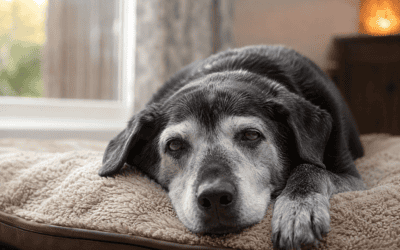
Watching our dogs grow older can stir up a mix of emotions—gratitude for the years we’ve shared and fear of what’s to come. For many of us, the thought of seeing our dogs decline and eventually saying goodbye feels overwhelming, and it’s easy to approach the geriatric years with trepidation. But what if we reframed this chapter? What if, instead of focusing on the inevitable, we leaned into gratitude and appreciation for the incredible gift of having an old dog by our side? Not everyone gets to see their dog’s muzzle turn gray or experience the soulful wisdom that seems to emerge as they age. There’s a tenderness, an intelligence, and a depth to senior dogs that feels almost otherworldly—like they’ve reached their highest selves. This time is an invitation to slow down, to savor the connection, and to step fully into the role of caretaker, supporting their happiness, comfort, and mobility for as long as possible. In this blog, I’ll share actionable strategies to help you extend your time together, deepen your bond, and ensure your dog’s golden years are filled with love, comfort, and dignity. Let’s dive in.
Why Our Old Dogs Slow Down
Osteoarthritis, also called degenerative joint disease, is the progressive breakdown of cartilage in the joints that leads to pain, stiffness, and reduced mobility. It’s the #1 reason I’m called for euthanasia in elderly dogs, not because the disease itself is immediately life-threatening, but because the chronic pain and loss of mobility slowly erode a dog’s quality of life. The earliest signs can be subtle — reluctance to jump or climb stairs, stiffness after rest, lagging behind on walks, or changes in mood and willingness to play. Catching these changes early matters. With a proactive plan that combines weight management, joint-supportive supplements, low-impact exercise, home environment adjustments, and, when needed, medical or integrative therapies, you can often slow the progression and keep your dog comfortable for years longer. Supporting mobility means protecting not just their body, but also their independence and spirit.
Symptoms of osteoarthritis include:
- Slowing down
- Playing less
- Difficulty rising
- Lameness/limping
- Stiff, stilted gait
- Irritability
- More time spent in their beds
- Difficulty with stairs
- Sleeping more, moving less
- Episodes of slipping, falling or splaying out
- Restlessness
- Excessive panting
- Whining or crying
Although aging is inevitable, there is much that we can do to elevate each “good” day of our dog’s life. Keeping them comfortable and mobile in their golden years is our responsibility as dog guardians. The key is to start doing these things as early on as possible.
Healthy Diet
This is, by far, the best way that you can extend your dog’s life and delay the onset of aging symptoms. It is especially important as your dog reaches his geriatric years to remove processed dry kibble diets and treats. A high-quality commercial or homemade raw diet is the best option. I have seen my patients transform more with this step than with any other medications or supplements I prescribe.
Commercial raw diets come in frozen or freeze-dried options. If raw feeding is not the right choice for you and your lifestyle, then the next best option is a homemade, gently cooked diet. If you choose this option, it is important to be sure that you are feeding a balanced diet. Balanceit.com has complete recipes to help you achieve this. A third option is a human-grade dehydrated diet, such as Honest Kitchen. You may also feed a combination of these different diets if that works better for you as well as your budget.
If switching to one of these diets is not possible for you then at least replace 50% of the kibble with whole foods. This can be lean proteins such as ground turkey, chicken, beef, or white fish. Add healthy vegetables such as green beans, broccoli, peppers, and peas. Add healthy fruits such as berries, apples, and pumpkin. Check out my blogs on feeding vegetables and fruits to your dog.

Ideal Weight
Keeping your dog at his ideal weight is monumental in extending his life. Your dog should have a “waist” and you should be able to easily feel his ribs. Check with your veterinarian to see if your dog is at its ideal weight. Overweight and especially obese dogs’ lives are dramatically shorter than lean dogs.
Health Checks
Regular exams and bloodwork ( CBC/chem/4DX/urinalysis) performed every six months will help catch other illnesses that may be cropping up for your aging dog. Radiographs and/or ultrasound are also good diagnostic tests to have performed every 6-12 months once your dog is in this age group.
Supplements
Omega-3s
Benefits of Omega 3 supplementation:
- Brain, heart and joint support
- Reduction of DNA damage
- Treatment for skin and coat
- Controls inflammation
- Cancer prevention
- Mood support
- Studies show it increases longevity
Here are some options for providing omega 3s to your dog. Choose the one that best fits your lifestyle and daily routine.

- Green-lipped mussels are a source of both omega-3 fatty acids and chondroitin sulfate. A study done in 2013 aimed to establish the effect of a diet enriched with green-lipped mussels (GLM) on pain and functional outcomes in osteoarthritic dogs. This study provided strong clinical evidence to support feeding osteoarthritic dogs a GLM-enriched diet. One example of this product is Safe Sea Premium Fatty Acid.
- Salmon oil- Salmon is a great source of omega 3s however I recommend avoiding Alaskan and BC salmon due to petroleum based hydrocarbons that are still detectable from the Exxon disaster. Unfortunately there are no refinement or filtration methods that will remove this type of contaminant.
- Krill oil is extracted from Antarctic krill, a small shrimp-like animal. Krill oil contains omega-3s in both triglyceride and phospholipid form. Krill are very small and have a short lifespan, so they don’t accumulate many contaminants during their lifetime. Therefore, their oil doesn’t need to be purified and is rarely found in the ethyl ester form. Krill oil is highly resistant to oxidation, as it naturally contains a potent antioxidant called astaxanthin. Downside is that it is expensive.
- Sardines are a wonderful source of Omega-3s and have many other benefits as well. Purchase sardines in water with no salt added. Small dogs can receive 1
- sardine per day, and large dogs, 2 sardines per day. You can store the unused portion in the fridge.
Glucosamine and Chondroitin Sulfate
Glucosamine is a natural anti-inflammatory. It can help improve mobility and increase range of motion and ultimately help slow the aging process in your dog’s joints.
Glucosamine is naturally produced within the joints, where it combines with collagen to produce and repair cartilage. As your dog ages, his body produces less glucosamine. This means the cartilage deteriorates, leaving less cushioning in the joints and less of the lubricating synovial fluid.
It is important to provide glucosamine from natural resources due to the increased bioavailability. Bioavailability means the actual amount of a nutrient or drug that gets digested and delivered to the cells that utilize it. A 2013 Chinese study looked at ways to improve bioavailability, explaining that “Glucosamine, as a dietary supplement for management of osteoarthritis, has a low and erratic oral bioavailability due to its transport-mediated absorption and pre-systemic loss in liver and GI tract.” here are some natural ways that you can supply glucosamine:
- Green lipped mussels are rich in glycosaminoglycans (or GAGs). Research has proven that they reduce arthritis symptoms in dogs. A 2007 study at the University of Helsinki found that “dogs showed a beneficial clinical response to treating OA-induced pain and locomotion difficulties with GLM.”
Buying green lipped mussels fresh is difficult because they are from New Zealand but there are a few green lipped mussel oil or powder supplements for dogs on the market. Make sure the product is cold extracted or freeze dried. And if you buy a powder, make sure it still has the oil in it. Some manufacturers strip out the oil and sell it separately. Look for a powder with at least 6% fatty acids. One of my favorite products is green eggs from fourleafrover.com.
Dose: Give a 500 mg of green lipped mussel powder per 20lbs body weight per day. If you use oil, give 10mg per day to a 10 lb dog. Or follow the dosing instructions on the package.
These supplements are the most effective way to give your dog green lipped mussels however, you can also buy freeze dried green lipped mussel treats and give 2 mussels for every 10 lbs of body weight per day. - Natural Eggshell Membrane (NEM®) : NEM® is the natural thin membrane that’s on the inside of an eggshell. Eggshell membrane contains naturally occurring glycosaminoglycans. This is a great supplement for arthritis as it can help reduce pain and improve joint function. A 6-week trial on 51 dogs found a 23.6% improvement in pain compared to placebo, and a 26.8% quality of life improvement. The study also measured changes in serum levels of cartilage degradation biomarker CTX-II. This showed a 47.9% improvement. Make sure the eggshell membrane you buy carries the NEM® registered trademark. Give your dog 120mg per 20 lbs of body weight a day.
- Adequan is a concentrated injectable form of glucosamine that can make a significant difference in dogs with arthritis. I go into details on it later in this post.
- Trachea is made up of cartilage rich in glucosamine and chondroitin. Raw dog food suppliers are a great place to find these. You can also find them online. I get mine from fourleafrover.com. Adequan, an injectable joint medication your vet may suggest, comes from beef trachea. It’s a semi-synthetic glycosaminoglycan that’s made by extracting glycosaminoglycans (GAGs) from bovine tracheal cartilage.
- Shellfish Shells
Shellfish shells contain glucosamine.
If you buy wild shrimp with the shells on, you can feed them to your dog or make the shellfish shells into a glucosamine-rich broth by simmering them in water for a few hours. - Bone Broth
Bone broth has countless health benefits, and it’s loaded with glucosamine and other joint-supporting nutrients. You can buy bone broth for dogs or you can make your own by simmering 24 hours or so on the stove or in a slow cooker. - Elk velvet antler is a popular supplement for joint health in dogs due to its natural content of growth factors, collagen, glucosamine, chondroitin sulfate, and essential amino acids. These components are beneficial for maintaining and repairing cartilage, reducing inflammation, and improving joint mobility.
Turmeric
This spice, along with its active ingredient, curcumin, has been proven to reduce pain and inflammation. Chronic inflammation is the true cause of most degenerative and inflammatory health issues in your dog. Curcumin contains more than two dozen anti-inflammatory compounds, including six different COX-2 inhibitors. Chronic low-grade inflammation is a major driver of arthritis and joint degeneration. In human studies, turmeric extracts containing at least 20 percent curcuminoids are comparable in their effects to the drug ibuprofen.
Combining turmeric with bromelain (the pineapple enzyme) provides even better results. The recommended dose of turmeric for dogs is 15mg–20mg per pound of body weight per day, or more simply put, 1/8 to 1/4 tsp per day for every 10 pounds of body weight. You can increase the amount from there, up to about a Tbsp for larger dogs. Try to give the turmeric in smaller amounts a few times a day because curcumin leaves the body quickly.
It is a bright yellow color so it can stain your hands, countertops and your dog so be careful.
Cautions: Turmeric can cause constipation, so add extra water to the meals when you add turmeric. Turmeric is contraindicated for patients with gall bladder disease. Turmeric can interact with some medications, including anti-inflammatory and diabetic medications. And it may also interfere with some chemotherapy treatments. So if your dog is on any medications, check with your holistic vet before adding turmeric to his treatment plan.
CBD Oil
Everyone, including your dog, has a cell-signaling system known as the endocannabinoid system (ECS). It is thought that CBD interacts with a core component of the ECS — endocannabinoid receptors in the brain and immune system. This response creates anti-inflammatory and pain-relieving effects that help with pain management. These receptors also alter the way the brain responds to pain.
CBD also binds to CB2 receptors found in the nervous and immune systems. When this happens, the body may produce more cannabinoids naturally. This helps reduce inflammation even more and reduce the pain associated with it.
One of the first CBD studies was done at Cornell, and it showed that CBD helped with pain management in many dogs. In the study, more than 80% of the dogs with osteoarthritis experienced a decrease in pain, allowing them to be more comfortable and active.
Scientists at Colorado State University conducted a 90-day pilot clinical trial to assess the impact of a full-spectrum product containing hemp extract and hemp seed oil on 37 dogs with chronic maladaptive pain (primarily as a result of osteoarthritis). Thirty-two dogs completed the study, of which 30 showed evidence of improved pain management. At the time of enrollment, 23 dogs were taking gabapentin; with the addition of CBD, 10 of those dogs were able to discontinue the gabapentin and an additional 11 were able to have their daily dose reduced.
Choosing a CBD product:
Not all CBD is created equally.
- Be sure that you purchase from a trusted company with third-party testing. Look For A certificate of analysis. A certificate of analysis is a document that shows the amount and type of cannabinoids in the CBD product. This should come from a third-party laboratory.
- Check the label of your CBD product to make sure it’s a full spectrum or broad spectrum. This means your dog’s CBD oil contains not just CBD, but other important cannabinoids that occur naturally in full-spectrum hemp. This includes CBC (Cannabichromene) and CBG (Cannabigerol).
- Make Sure Your Dog’s CBD Uses CO2 Extraction. There are two common ways to extract CBD oil from the hemp plant: CO2 extraction and solvent extraction.
CO2 extraction uses carbon dioxide to extract oil from the plant. Using a high-pressure chamber, CO2 puts pressure on the hemp. This breaks down the hemp and releases the oil. This method of extraction creates oils with a higher concentration of CBD. That means your dog will get more from his supplement. This makes the product more expensive, but it’s worth it. On the other hand, the cheaper way to extract oil from the hemp plant is with solvents, such as propane, butane, and petroleum products. Residue from these solvents will be in the product and they can be toxic to your dog.
* If your dog is taking any other medications or supplements you will want to check with your holistic vet before adding CBD to your dog’s treatment plan. CBD oil has many health benefits but it can change how your dog metabolizes some medications or supplements.
Side Effects of CBD could include mild sedation, elevated appetite, excessive drinking, nausea, or vomiting.
I have found the effectiveness of CBD for my patients to be dependent on the brand they are using and varies from dog to dog.
Boost Immunity with Medicinal Mushrooms
For centuries, various cultures around the world have used mushrooms for medicinal purposes. Medicinal mushrooms are becoming more commonly available in the natural products marketplace as the evidence of their value to the immune system and to address various diseases, including cancer, becomes better understood through basic research and clinical trials.
Turkey tail mushrooms in particular have two main medicinal components: Polysaccharide-K (PSK) and polysaccharide-P (PSP). They form part of the mushroom’s cell wall and they give the cell its structure. Both PSK and PSP are called beta-D-glucans. These beta-glucans can bind directly to receptors in immune cells … and trigger immune changes that can increase the activity of some immune cells, or restore a healthy immune response.
Shiitake mushrooms are known for immunomodulating; increasing NK T cell activity, increases interferon, antiviral, liver supportive. Lentinan is used as an injectable in human oncology patients in Asia, but has also been found to be effective orally, reduces cholesterol and is antibacterial.
Chaga mushrooms applications include: antitumor (breast, lung, cervical, stomach, liver), antiviral, anti-tuberculosis, digestive, inflammatory bowel disease, diabetes, ulcers, cardiotonic and liver supportive, psoriasis.
Lion’s Mane is known for it’s anti-cancer effects, immune modulation, nerve growth regeneration, antimicrobial, Parkinson’s disease, used to treat atrophic gastritis.
I like this blend from realmushrooms.com that also includes turkey tail, Shiitake, Maitake and Chaga mushrooms. The recommended dose is 100mg/kg/day. This can be divided into two doses.
To discover which products work best for your dog, especially with osteoarthritis symptoms, follow label directions and complete one course of treatment (typically four weeks) before starting another. Keep a journal for your dog and describe the arthritis symptoms (such as his willingness or ability to get in the car or jump up on the couch, or how long it takes him to get on his feet after laying down) before beginning any new remedy. Another way to track the effectiveness of a new product is to take a video of your dog walking, turning, or playing before and after a course of treatment. Most dogs with moderate to severe arthritis require a multimodal approach.
Non-Pharmacologic Intervention
Physical Therapy

If this is in your budget, it is a great way to support your dog’s joints and overall well being. Underwater treadmill is a great way to get your old dog moving and strengthen his core.
Acupuncture
This is a safe, non-pharmacologic intervention with minimal adverse effects that most animals tolerate well. It has become more accepted for pain relief in veterinary medicine. In fact, the pain management guidelines published by the American Animal Hospital Association, American Association of Feline Practitioners, and World Small Animal Veterinary Association endorse acupuncture as a safe adjunct treatment for pain management in dogs and cats that should be strongly considered as a part of a multimodal pain management regimen.
Massage and Heat Therapy
This is a treatment that you can provide at home. Gently massaging the muscles surrounding your dog’s joints and back can be very therapeutic and enjoyable for your old guy. Provide moist heat following the massage. It is also a great way to connect with your dog.
Other non-pharma pain management options include physiotherapy and physical medicine modalities:
- Heat
- Cold
- Therapeutic/red light laser
- NMES
- TENS
- Therapeutic U/S
- Tissue mobilization
- Medical massage
- Tui Na
- Acupuncture
- Chiropractic/osteopathic manipulation
- Myofascial trigger point therapy
- Hydrotherapy
- E-stim whirlpool
- Swimming
- UWT
A unique physical medicine option is targeted pulsed electromagnetic field (tPEMF) therapy. The biophysics of tPEMF includes increased Ca2+ signaling and decreased production of nitric oxide, and this combination decreases overall inflammation. Increased nitric oxide (NO) production is associated with osteoarthritis . Factors such as inflammation and mechanical loading can lead to increased production of inflammatory mediators such as nitric oxide and prostaglandins. (sorry I’m geeking out here)
This modality decreases both acute and chronic inflammation, is safe, effective, and non-invasive. This is a great way for you to actively participate in your dog’s care.
Tools To Aid Mobility
Using assistive devices like wheelchairs (walking, two-wheel, four-wheel), slings, supportive vests, and rolling carts/wagons can not only help your dog get around but also elevate his quality of life.
Modify the home environment to make things easier for him such as:
- Stairs to get up to the couch or bed
- Adding ramps to help him navigate decks, car entry/exit and beds.
- Be sure your old guy or gal has orthopedic beds in multiple rooms.
- Have them raise food and water dishes to elbow height.
- Cover slippery floors with cheap runners.
- Modify play with other pets.
- Anti-slip socks or booties. Nail coverings to help grip floors.
Handicappedpets.com has all of the above.
If Arthritic Pain Is Still Not Controlled…
Non-Steroidal Anti-Inflammatories
If diet, supplements, and non-pharmacologic interventions are no longer working then it’s time to consider NSAIDs and other pain-controlling options. In the later stages of arthritis, this type of medication may become necessary for your dog’s mobility. This medication does have some potential side effects that you should be aware of, such as gastric ulceration, vomiting, diarrhea, lack of appetite, liver elevations, and kidney damage.
Non-steroidal anti-inflammatories should be reserved for more severe symptoms, and your dog will need to be monitored closely to ensure that this remains a safe option for him. Blood work should be performed prior to starting this medication, three months after initiating treatment, and then every 6 months thereafter. If your dog develops any gastrointestinal symptoms while taking this type of medication, you must stop giving it immediately and call your veterinarian. These side effects sound scary, however, if you take these precautions, you can give this medication safely. It may be the only way your old guy can walk when he is in his final stages of osteoarthritis. I have found in most patients that once I get the severe pain under control using a multimodal approach I can titrate down the NSAID dose and often get them off of it after a period of time. Or only use it during acute on chronic flare ups of arthritis.
PSGAGs (Adequan®)
PSGAGs are the building blocks of cartilage but will not replace cartilage that is gone. Adequan® Canine (polysulfated glycosaminoglycan) is the only FDA-approved disease-modifying osteoarthritis drug (DMOAD) that inhibits cartilage loss in the dog’s synovial joints, and may help to heal micro-fractures, increases the viscosity of synovial fluid, and thus provides an indirect anti-inflammatory effect. As for dosing, use 2 mg/# SQ two times weekly for four weeks, weekly for four weeks, and then every 10–15 days. Inject SQ, not IM (teach clients how to do this at home). Start using as early as possible, as long-term use is OK. It is in the synovial joints within 72 hours.
Amantadine
Amantadine is a pain reliever that I reserve for patients with severe chronic pain that is no longer responsive to current pain-relieving medications. It is a N-Methyl-D-aspartate (NMDA) receptor antagonist. NMDA receptors are involved with the transmission of pain impulses from nerve to nerve, especially in chronic pain situations. When a neurotransmitter attaches to NMDA receptors, pain perception is amplified. When the receptors are blocked by amantadine, the neurotransmitter cannot attach and pain perception is diminished. Amantadine does not work well as a stand-alone pain reliever. A perfect candidate for amantadine might be a dog suffering from arthritis pain who is already being given a nonsteroidal anti-inflammatory drug (NSAID), gabapentin, joint supplements, and maybe even an opioid pain reliever but still needs more relief. Possible side effects of amantadine for dogs include agitation, restlessness, flatulence, and diarrhea.
Gabapentin
Gabapentin, in veterinary medicine, is used mostly as an adjunct in the control of chronic pain, especially arthritis pain. This medication is particularly beneficial for neurologic/spinal pain as it alters how pain is transmitted in the spinal cord. It also has anti-anxiety effects. I have had success using Gabapentin as an add-on medication to help provide my severely arthritic patients with pain relief. However, sometimes the sedative effects can be too much for geriatric patients making it even harder for them to ambulate. Therefore, I only add this as a last resort and I start with a low dose and titrate up while monitoring the response closely.
Concerns and cautions with Gabapentin use include:
- Gabapentin is removed from the body through the kidneys therefore it’s use should be avoided in patients with renal insufficiency.
- Gabapentin is not safe for use in pregnancy.
- Gabapentin should not be abruptly discontinued after long-term use as seizures can be precipitated. Instead, gabapentin should be gradually tapered off over a couple of weeks.
- Gabapentin oral suspension is sweetened with xylitol, which has toxic properties in dogs. The doses used to control pain should not contain enough xylitol to be problematic but anti-seizure doses might. The issue can be avoided by having liquid formulations compounded rather than using the commercially available oral liquid.
- Side Effects include sedation and incoordination though they are temporary and resolve in a few hours.
Tramadol
Tramadol is a commonly used pain reliever in dogs. I, personally, have not seen great results from using Tramadol for chronic pain relief in my canine patients. The lack of the M1 metabolite in the dog has created a great deal of controversy regarding whether tramadol truly is an effective pain reliever in dogs or what its role in pain relief actually is. Studies testing tramadol against actual anti-inflammatory pain relievers have not shown much benefit to tramadol used alone. It may be that tramadol is able to improve the efficacy of other analgesics when they are combined.
As our dogs age, keeping their well-being and physical health a priority will make a significant difference in the length and quality of their lives. Supporting your senior dog through his golden years can be a rewarding and sacred time rather than one filled with trepidation. Start with natural approaches first and add on additional modalities as they are needed.